Bar With Private Room NYC for Fundraisers, Benefits, and Community Nights

Finding the right venue can make or break a fundraiser. That sounds dramatic until you have watched a well-intentioned event lose momentum because the room felt cramped, the sound bounced off the walls, or the bar staff seemed surprised that guests planned to mingle, donate, and make speeches in the same night. In New York City, those details matter even more. People move fast, calendars fill early, and guests tend to decide within minutes whether an event feels polished enough to stay for another drink, place a bid, or invite a friend to the next one.
That is why so many organizers start with a specific search: a Bar With Private Room NYC hosts will actually trust for fundraising, benefit events, and community nights. It is not only about privacy. It is about control, energy, and the ability to create a room that serves a cause rather than competing with it.
A strong Bar With Private Room setup gives organizers a rare combination in the city. You get the social ease of a bar, the built-in hospitality of a professional staff, and a contained space that lets your program breathe. For nonprofit teams, alumni groups, neighborhood organizations, advocacy circles, and cultural collectives, that balance can be the difference between a forgettable happy hour and a night that raises real money and deepens relationships.
Why private rooms work especially well for mission-driven events
Fundraisers are different from birthday parties and office socials, even when the menu looks similar on paper. The goal is not just to gather people. The goal is to create enough warmth, attention, and trust that guests feel moved to participate. Sometimes that means donating on the spot. Sometimes it means buying tickets for a future event, signing up to volunteer, or meeting the organizer who has been trying to connect with them for months.
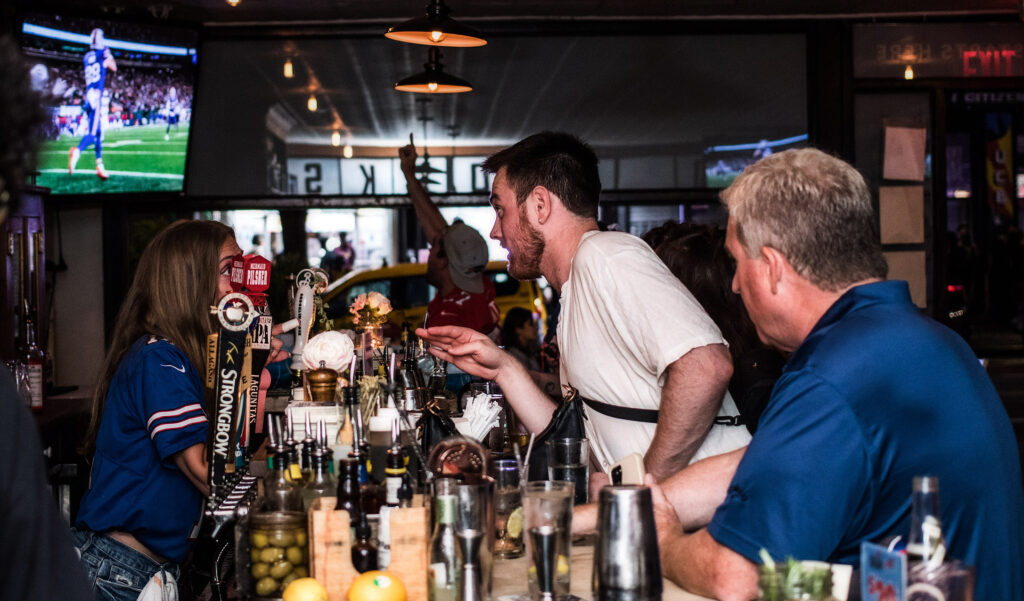
A private room supports that kind of interaction in a way the main bar rarely can. Noise stays more manageable. Your welcome table has a clear place to sit. Guests understand where the event starts and ends. If you need to give a short speech, honor a board member, introduce a beneficiary, or run a small raffle, you are not competing with a televised game ten feet away.
There is another practical advantage that experienced event planners learn quickly. People spend more generously when they feel comfortable. A private space tends to produce longer stays, stronger conversations, and fewer awkward drop-ins from unrelated patrons. That may not sound glamorous, but it directly affects fundraising. If guests remain for ninety minutes instead of forty-five, they order another round, linger through the appeal, and are more likely to respond to a call for support.
The New York factor, and why venue fit matters more here
New York offers endless options, but abundance creates its own problems. A venue can look ideal online and still be a poor match in person. I have seen organizations choose bars based on sleek photos, only to discover that the private room was effectively a curtained corner with weak acoustics and no real circulation space. I have also seen modest-looking venues outperform trendier ones because the room layout encouraged connection and the staff understood event timing.
In the city, square footage is expensive and often used creatively. That means you need to ask better questions than “How many people can it hold?” Capacity is one number, not the whole story. A room that technically fits sixty can feel crowded at forty if there is one narrow entrance, no place for coats, and a bar line that blocks the mingling area. On the other hand, a room with clear sightlines, scattered soft seating, and an efficient service station can feel lively and generous without being oversized.
Location also changes attendance more than many first-time hosts expect. For community nights, convenience often matters more than prestige. A bar in a neighborhood your audience already visits can beat a glamorous room that requires three train transfers. For benefits aimed at donors or sponsors, proximity to offices, transit hubs, or cultural institutions may matter more. The best Bar With Private Room NYC for your event is rarely the one with the flashiest listing. It is the one that fits your guests’ habits.
What organizers should look for before signing anything
A venue tour reveals things a PDF package never will. The strongest spaces for fundraisers tend to share a few characteristics. First, the room feels distinct from the main bar without feeling cut off from the venue’s overall energy. Guests want a sense of occasion, not exile. Second, the service plan is obvious. If people have to wander out to a crowded public bar to get a drink, the room loses coherence fast. Third, there is at least one natural focal point for remarks, a presentation, or a short honoree moment.
Lighting deserves more attention than it gets. Dim rooms can feel chic for date night and terrible for registration, auction displays, or donor recognition. You do not need banquet brightness, but people should be able to read a name tag, scan a QR code, and take a photo that does not make everyone look like a silhouette.
Sound is just as important. Some bars tuck private rooms into basements or back spaces where music carries oddly. If you plan to speak for even five minutes, test the room while staff are moving and the bar is active. The issue is rarely volume alone. It is clarity. Guests can forgive a casual setup. They do not forgive straining to understand why they are there.
The staffing model should also be clear from the start. Ask who manages the room during your event, how many bartenders or servers are assigned, and whether one person acts as a point of contact. A fundraiser usually has more moving parts than a standard social gathering. There may be sponsor signage, gift bags, ticketing, a short program, or a table for materials. A venue that handles this often will discuss logistics comfortably rather than vaguely.
The financial structure behind a good event
Many groups begin the search with sticker shock. New York private room rentals can look expensive, especially for smaller nonprofits or grassroots communities. The good news is that bars often structure pricing more flexibly than traditional event halls. Instead of a large flat rental fee, you may encounter food and beverage minimums, partial buyouts, timed reservations, or packages that blend passed appetizers with drink tickets.
That flexibility can work in your favor if you understand the trade-offs. A lower room fee with a high minimum may be excellent for a crowd that drinks and socializes heavily. It may be a poor fit for an audience focused on a program, especially if many guests do not drink alcohol. A straightforward buyout can feel costly up front but makes budgeting easier. Some venues allow a hybrid model where sponsors cover part of the minimum in exchange for visibility, which can be useful for benefit nights.
One of the smartest budgeting moves is to align event format with venue economics. A two-hour cocktail fundraiser often performs better than a long, loosely structured evening because spending is concentrated and guest energy stays high. If your community prefers a more relaxed gathering, build in a simple reason for guests to act early, such as a welcome toast, timed raffle drawing, or matching donation window.
Hosts should also watch for hidden friction points. Service charges, tax, overtime, coat check, security, AV add-ons, and outside dessert fees can shift the final number substantially. None of these are unusual, but they need to be understood early. The best venue partnerships feel transparent, not surprising.
How the room should support the type of event you are hosting
Not every fundraiser needs the same kind of private room. A young professionals benefit night has different needs than a mutual aid gathering or a parent association reception. It helps to picture guest behavior rather than just attendance count.
For a networking-heavy fundraiser, a room with standing cocktail tables, a dedicated bar, and easy circulation usually works best. People need to move without bottlenecking. For a benefit with a short speaking program, a space with one visual anchor and flexible seating can be more effective. For a community night centered on conversation, workshops, or recurring meetups, acoustic comfort and approachable design matter more than trend-driven décor.
I have seen smaller organizations overbook space because they feared looking unsuccessful if the room felt too full. Usually the opposite is true. Fundraising rooms benefit from some density. The energy of a busy room encourages giving and conversation. The key is controlled density, not crowding. Guests should still be able to order drinks without twenty-minute waits and have a conversation without leaning into each other all night.
There is a sweet spot in many bar private rooms where the room feels active at roughly seventy to eighty percent of functional capacity. That leaves enough motion for arriving guests, service, and photo moments without making the space feel picked over by the end of the night.
Food and drink, and how they shape generosity
The menu affects mood more than many hosts realize. A Bar With Private Room becomes more effective for a fundraiser when the food and beverage plan matches guest expectations. If your crowd is coming straight from work, passed hors d'oeuvres and one substantial bite can keep people engaged. If the event starts later, lighter snacks may be enough. If your audience includes older donors or families, accessibility and familiarity often matter more than novelty.
Drinks deserve similar judgment. An open bar can feel generous, but it is not always necessary. Drink tickets or a hosted first round often strike a better balance between welcome and budget discipline. Signature cocktails tied to the cause can work well if they are simple enough for quick service. The fastest way to flatten room energy is a bar line that never shrinks.
It is worth remembering that not every guest drinks alcohol. Strong nonalcoholic options are now standard hospitality, not an afterthought. They matter for inclusivity, for younger guests, and for anyone attending multiple events in one week, which in New York is common. A well-made spirit-free option sends a subtle but important message that everyone is part of the night.
The details that lift a community night from casual to meaningful
Community nights often have looser goals than formal benefits, but they still need structure. The best ones feel welcoming without being vague. People should know why they are there within the first few minutes, whether that means supporting a neighborhood project, meeting others in a shared network, or raising funds for a specific need.
Small design choices matter here. A visible host at the entrance changes the entire tone. So does a short opening welcome, even if it lasts only two minutes. In private rooms, guests are more willing to talk to new people because the event feels bounded and intentional. That is one reason recurring community nights do so well in bars with private space. The room becomes familiar, and familiarity builds attendance.
A few practical touches often pay off:
- clear signage for check-in, restrooms, and donation method
- one brief program moment, usually within the first hour
- a seating mix that supports both mingling and short breaks
- simple lighting that flatters people and photos
- a firm end time that respects both guests and staff
Those choices sound basic, but they solve the most common event problems before they start. People feel guided, not managed. That distinction matters.
Working with venue staff as partners, not just vendors
The strongest fundraising events usually come from collaborative planning. When venue staff understand the cause, they tend to serve the event better. That does not mean every bartender needs your mission deck. It means the manager should know the cadence of the night, when speeches happen, whether there is a raffle, and how donations are being collected.
Share a simple run of show. Walk through arrivals, welcome remarks, any sponsor shout-outs, and the close. If there is a volunteer team, introduce the lead person to the venue manager before doors open. If you are expecting a Bar With Private Room NYC board member or honoree who needs a quieter corner, mention that too. These small handoffs prevent confusion.
It also helps to be realistic about what a bar excels at. Bars are great at hosting lively gatherings with hospitality built in. They are not all equipped for elaborate production, dense registration workflows, or gallery-style silent auctions. If your event requires significant staging, lots of display surfaces, or multiple microphone transitions, you may need to simplify or look beyond a standard private room.
That said, many New York bars have become surprisingly sophisticated event partners. They host media mixers, launch parties, nonprofit receptions, and neighborhood associations all the time. The best teams know when to speed service, when to lower music, and how to help a room pivot from social hour to purpose.
Common mistakes first-time hosts make
The most frequent error is trying to do too much in too little time. A fundraiser in a bar private room succeeds when it focuses on one or two outcomes, not six. If you want guests to network, hear from a speaker, browse auction items, meet the founder, and dance, the room and schedule can become Bar With Private Room NYC strained fast.
Another common mistake is underestimating setup time. In New York, room turnover can be tight. If the venue gives you thirty minutes before guest arrival, believe them. Bring only what can be placed quickly and cleanly. Overly complicated décor almost never improves returns. Good signage, a clear welcome point, and one branded visual often do more than elaborate installations.
Hosts also misjudge sound. Even intimate rooms need a plan for remarks. If the venue offers a microphone, test it. If they do not, keep remarks shorter than you think you should. A heartfelt ninety-second beneficiary story lands better than a seven-minute speech that guests cannot hear.
Finally, some organizers forget to build in a giving mechanism that feels natural in a bar environment. Passing around paper forms can stall momentum. QR codes, mobile links, or staffed donation points tend to work better because they respect the flow of the evening.
How to judge success after the event
Revenue matters, but it is not the only measure. A good fundraiser in a Bar With Private Room NYC should also expand your circle. Look at attendance quality, not just headcount. Did the room produce meaningful introductions? Did guests stay through the appeal? Did staff execution make the organization look thoughtful and competent?
Track practical indicators. Compare RSVPs to arrivals. Note average stay length. Review beverage and food pacing against your minimum. Watch where bottlenecks formed. If ten people left during speeches because they could not hear, that is useful data. If guests kept asking where to donate, that is useful too.
For community nights, the best metric may be recurrence. Did people ask when the next one is? Did they bring someone new? Did the venue feel like a place your group could claim again without starting from zero? Repetition is where private room events get powerful. Once guests know the room, the neighborhood, and the rhythm, turnout gets easier and planning becomes less fragile.
Choosing a venue that fits the cause, not just the budget
There is no single ideal venue for every fundraiser in New York. A literary nonprofit may want a quieter room where conversation matters. A younger donor network may thrive in a more energetic cocktail setting. A neighborhood mutual aid group may care most about affordability, subway access, and a genuinely welcoming staff.
The right Bar With Private Room is the one that supports the tone of your cause and the behavior of your guests. If your event relies on heartfelt remarks, prioritize acoustics and focus. If your strategy depends on broad social attendance, prioritize circulation and service speed. If your goal is to build a recurring community, prioritize comfort, accessibility, and a room that people will want to return to.
New York rewards clarity. When organizers know what kind of night they are building, venue decisions get easier. You stop chasing the most photogenic room and start looking for the one that can hold attention, generate warmth, and move people from casual support to genuine commitment.
That is what makes a well-chosen private room so effective. It gives your cause a home for the evening. In a city full of distraction, that is not a small thing. It is often exactly what turns a gathering into a successful fundraiser, a benefit with momentum, or a community night people remember long after the last glass is cleared.
The Winslow
Address: 243 E 14th St, New York, NY 10003
Phone number: +12127777717
FAQ About Bar With Private Room NYC
Which bars in NYC offer private rooms?
Many bars in New York City offer private and semi-private rooms for parties and events, ranging from hidden basement speakeasies to upscale lounge spaces. Top options include The Back Room on the Lower East Side, Dear Irving Gramercy, Pebble Bar in Midtown, Mister Paradise in the East Village, and The Winslow in the East Village.
What is a private room in a pub called?
A small, private seating area or partitioned booth in a traditional pub is most commonly called a snug. Larger private rooms used for events, parties, or dining are typically referred to as private dining rooms, function rooms, or back rooms.
How much does a 2 hour open bar cost?
A 2-hour open bar generally costs between $15 and $45 per person, depending heavily on the quality of alcohol you choose. For a standard group of 100 guests, this translates to an overall cost of $1,500 to $4,500 before taxes, setups, and staff gratuities.